
When you drop a ball, it falls 16 feet the first second you release it. If you throw the ball horizontally, it will also fall 16 feet in the first second, even though it is moving horizontally… it moves both away from you and down toward the ground. Think about a bullet shot horizontally. It travels a lot faster than you can throw (about 2,000 feet each second). But it will still fall 16 feet during that first second. Gravity pulls on all objects (like the ball and the bullet) the same way, no matter how fast they go.
What if you shoot the bullet faster and faster? Gravity will still pull it down 16 feet during the first second, but remember that the surface of the Earth is round. Can you imagine how fast we’d need to shoot the bullet so that when the bullet falls 16 feet in one second, the Earth curves away from the bullet at the same rate of 16 feet each second?
Answer: that bullet needs to travel nearly 5 miles per second. (This is also how satellites stay in orbit – going just fast enough to keep from falling inward and not too fast that they fly out of orbit.)
Catapults are a nifty way to fire things both vertically and horizontally, so you can get a better feel for how objects fly through the air. Notice when you launch how the balls always fall at the same rate – about 16 feet in the first second. What about the energy involved?
When you fire a ball through the air, it moves both vertically and horizontally (up and out). When you toss it upwards, you store the (moving) kinetic energy as potential energy, which transfers back to kinetic when it comes whizzing back down. If you throw it only outwards, the energy is completely lost due to friction.
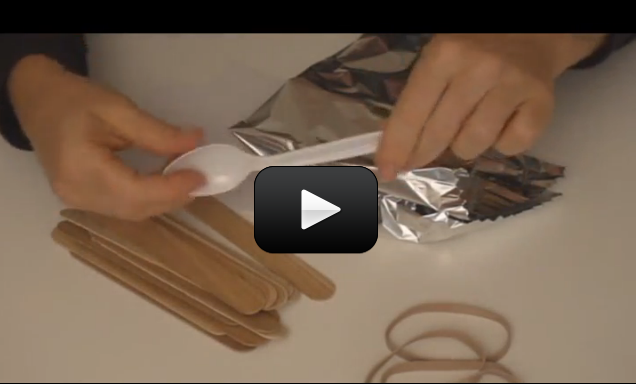
The higher you pitch a ball upwards, the more energy you store in it. Instead of breaking our arms trying to toss balls into the air, let’s make a simple machine that will do it for us. This catapult uses elastic kinetic energy stored in the rubber band to launch the ball skyward.
Please login or register to read the rest of this content.
Yes this is back in September’s Live Classes – click “Live Classes” and click on “September” and scroll down, you should see it.
I think I remember seeing a catapult challenge with examples of different types of catapults. I can’t seem to find it again. Where could I find this? Thank you so much. My kids just built bridges and towers and are having a great time!
I think they are all amazing!
wut is yuor fifret catupot
Here’s the link to that experiment for you:
https://www.sciencelearningspace2.com/2010/05/marshmallow-roaster/
So, I clicked on this video and it said SOLAR MARSHMALLOW ROSTER but it popped up as the catapult, why did the other video pop up but not the one I wanted what happened? 🙁
Sure thing! What did you have a question about specifically? Which part?
The reading sheat for this unit (topic) was a little difficult to understand and I was wondering what it meant? Could you help:-)
All objects fall 16 feet during the first second after they are released, if there’s enough room. If you only have 5 feet before it hits the floor, then it’s only going to fall 5 feet then *smack!* and it comes to rest. It’s because on the surface of the earth, the Earth’s gravitational field pulls on all objects equally, no matter if they are a ping pong ball or a bowling ball… they are both affected by the Earth’s gravitational field.
What do you mean something falls “16 FEET” in the first second? Wouldn’t you have to be up on a building for it to fall that far? Does this have something to do with the revolution of the Earth? Can you please explain this? I do not understand it and I KNOW my daughter will ask me about it!
That’s sooo cool! 🙂 I wonder how mini-marshmallows would fit into the theme?
My daughters love these and have been playing with them all day. My eldest is designing and building a whole game where you have to catapult in to large space themed marble run.
You tell me! (That’s what a real scientist does!) Try it again then, this time higher so they fall for 2, 3, and 4 seconds. What happens? Does it matter how long/far they fall? Do they always hit at the same time?
What happens if you take two sheets of paper, wad just one of them up into a crumpled ball, and now drop them both at the same time… do they hit the ground at the same time (they are the same weight, right?)
They both landed at the same time. What I want to know now is what would happen in the second, third, and fourth seconds.
Thank you
Zachary
Excellent question! Go get a golf ball and a ping pong ball, and drop them btoh at the same time from the same exact height. Now you tell me what you find out…
You said that every object falls sixteen feet during the first second. Why is weight not a factor in the equation.
Thank you
Zachary
CRAAAAASH! ha ha ha XD I noticed on the second video you didn’t break anything… CONGRATULATIONS!!!! : )
I’m seriously going to shoot popcorn with this thing!!!!
-Lucy Aslinger-
There’s only one worksheet download for the catapults since it’s the same lab experiment, but you can copy and paste the material list you need near the top. 🙂
Hi, are there Student Worksheets and Exercises available for the advanced catapult? I’d love to be able to print the directions with a supply list!
😈
popsicle sticks
What’s not there? If the videos don’t appear, make sure you’re logged in first.
they aren’t they’re!
Try looking in a craft store – you’ll need more than 9 for more projects!
can you send me 9 Popsicle sticks?
thanks
Great question! We have two different catapults on our online e-Science program website (the Clothespin Catapult and the Fast Catapult) – both of which are third class levers, because the effort (the pulling up motion) is between the load and the fulcrum. If a student moves their hand to the spoon tip on the “Fast Catapult” then that one becomes a second-class lever. The fulcrum is the spot that doesn’t move (where it’s attached, at the base of the spoon or the base of the popsicle stick), and the effort is in the elasticity of the popsicle stick/rubber band, depending on which one you were looking at.
Hope this helps!
Aurora
I’m teaching levers to my fifth grade class and i enjoyed your catapult video. Id like to know which class lever is this catapult? Can you point out to me where the fulcrum and the effort is. Thanks so much
This was a really cool project, and it really works. I made the simple version first, and then the advanced version. I like how the advanced version uses really simple things like popsicle sticks – on the hovercraft from Unit 1 I didn’t have the materials for the advanced one, but for this project I had the stuff for both. Some things I found out with a bit of testing:
-A larger angle results in a more effective catapult. I guess that this is why the advanced version shoots farther than the simple version – it has a HUGE angle. To improve the simple one, we put our stack of popsicle sticks on its side after rubber-banding the stack together. It actually works better than the original design of putting them flat side up.
-On the advanced catapult, I did have to pull the rubber band from the opposite side for easier loading like you did in the video. However, I discovered that the less rubber band I have to loosen up to load the catapult, the farther it shoots! Is this because it has more tension?
-Mary Crawford (age 12)
Yes, that’s a perfect application! You can use the projectile motion equations and have them graph those measurements.
http://en.wikipedia.org/wiki/Projectile_motion
http://www.xinventions.com/main/spud/motion_equ.htm
They can measure time aloft and how far (horizontal and vertical distance) and have them calculate the velocity and acceleration for a set of trials. If you change the mass of the object (marshmallow, ping pong ball, etc) you’ll want to do a separate set of trial runs for each.
Here’s a free simulator you can use to show how it’s supposed to work:
http://phet.colorado.edu/en/simulation/projectile-motion
The angle (theta) is the angle between the popsicle sticks that are spread apart by the stack. Since there are two different models of catapults, on the more advanced model, it’s the horizontal to the strike bar.
Let me know how it goes!
Aurora
Hi Aurora! My Algebra 2 students are just getting into quadratic equations and I thought this experiment would not only be fun but also might provide some data we could graph and discuss. Any suggestions?
There are three different versions – did you find them all? The third is a more advanced trebuchet.
THIS IS AWSOME i did it in 4 min ide like to see more
My kids, ages 13 and 9, are completely geeked about their catapults. They built them from start to finish, and I couldn’t be more excited about it. Thank you Aurora for making it easy for me, and super fun for them=o)
Glad you enjoyed it! 🙂
P.S. It was something very breakable.
P.P.S. Here’s another one where I broke something else: https://www.sciencelearningspace2.com/2010/05/butterflying-cups/
AWSOME CATAPULT! This catapult is EPIC!!!! 😀
P.S. what did you break?
Well… let’s just say it spent a week in the repair shop.
Aurora,
WHAT DID YOU BREAK!?!?!?!?!?!?!?!
~Jasmin
Awesome! Send it to my email ([email protected]) and we’ll put it with your post! 🙂 If you add a ‘What I learned” section then we put it in this section:
https://www.sciencelearningspace2.com/information/what-do-kids-learn/
My son couldn’t wait to get the supplies for the catapult, so he ran off, used what he had….legos, an old glasses case, masking tape, a plastic fork, rubber bands and a lego something….and it works! We will go get the supplies to try the one in the video.
I’d post a picture here, but can’t figure out how. It’s really goofy looking! 🙂
This was the BEST project ever!!! Love it!!!!!!!!!!!!!!!!!!!!!!!!!!!!!!!!!
Yes I do mean K’nex
Awesome! I love science too!! So glad you were thinking resourcefully! Send me a picture and I can post it to the website. Do you mean K’NEX?
Hello,I tried the advansed catapult, but I didn’ have tounge depresors, so I used Kenecks instead; And it worked!!!
I LOVE e-sceince,
P.S.I’m Merry’s daughter Anna.
Try more hot glue?
I can not get the clothes pin to stay on. Abbi.
Very cool, we will have to make that 🙂
This was awesome!!!! I made one big catapult and two small ones! So there was one on either side of the big one!
A ping pong ball has been flying across our living room all afternoon! We used 7 small Popsicles, 2 tongue depressors and several rubber bands for our fun catapult. We are certainly looking forward to trying another experiment tomorrow. Thanks Aurora 🙂
Great idea! I bet it looked great.
I found a box of 300 tongue depressors for only $4 on sale at Michael’s or JoAnn’s craft store – you can try there if you need to. The ones in smaller sets (less than 50 per pack) seem to be really expensive. And any rubber bands will work, as you found out. 🙂
my daughter made the frame out of plastic knives and instead of normal rubber bands she used hair ties. That is MUCH cheaper than 8 dollar toung depressers and 3 dollar rubber bands.
COOL!!!!!!!!!!
Anything slightly bendy and about that size will work. 🙂
Great Video. Is there anything you can substitute for the popsicle sticks?
AWSOME!!!
this is awsome
maybe on facebook
-Caleb
Sounds like fun – send a photo! 🙂
I bet if you added two round rods instead of seven popsicle sticks you could add wheels and make mobile.
-Caleb
it is cool
In the video I used hot glue, but if this doesn’t work, try epoxy (the 5-minute type).
What kind of glue did you use? We tried super glue and hot glue, and the bottle cap would fly off after a few shots.
You can use any number of rigid objects – in fact, there’s a student hat wrote to me saying he’d made a larger model using old bike tires (the inner tube part that holds air) for the rubber bands, spatulas for the spoon, and large pieces of wood for the frame. 🙂
That was cool! Do you have to use popiscle sticks for this experiment or can you use something else?
I made my catapult and it is AWSOME!!! now i am going to make a lego catapult.
My brother LOVES this. He is going to use it for his Legos/Playmoabile.
Holly Thomson:)
Well, it sounds like close to the end of the video when you launched the catapult it broke some glass.
sevy keble 🙂